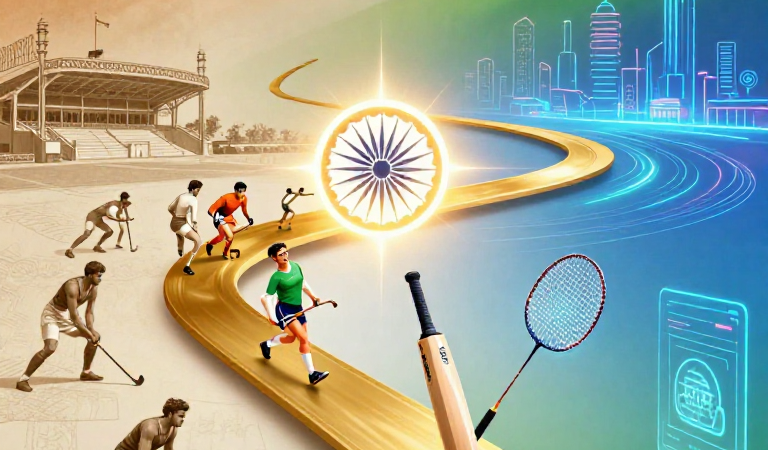
The landscape of Physical Education (PE) and Sports in India has undergone a profound transformation since independence. Understanding this evolution helps us appreciate the current push toward making sports an integral part of the academic journey. ### 1. The Early Years (1947 – 1960s) In the years following 1947, the focus was primarily on physical fitness as a tool for nation-building. The establishment of the Lakshmibai College of Physical Education in 1957 marked a significant step in professionalizing the field, moving beyond simple drill and exercise. ### 2. The First National Sports Policy (1984) A major turning point came in 1984, following the 1982 Asian Games in Delhi. This policy was the first to formally recognize the need to raise sports standards and make physical education a compulsory subject in schools, though implementation remained a challenge. ### 3. The 2001 National Sports Policy This policy introduced the dual objective of “Mass Participation” and “Excellence in Sports.” It aimed to bridge the gap between rural talent and urban infrastructure, emphasizing that sports should be accessible to every citizen. ### 4. The Modern Era: Khelo India and NEP 2020 Today, we are witnessing the most significant shift yet. The National Education Policy (NEP) 2020 has finally broken the “extracurricular” barrier, advocating for the integration of sports into the core curriculum. Initiatives like Khelo India are providing the data and infrastructure to support this vision. ### Conclusion From 1947 to today, the trajectory is clear: Physical Education is no longer just a “period” on the timetable—it is a science and a foundation for a healthier, more competitive nation.